
RHINE GHOSTS
THE STORY OF BEER IN CINCINNATI
Rudolf Abraham explores the roots of the strong beer culture in Cincinnati, and some of the taller tales embedded in the local mythology.
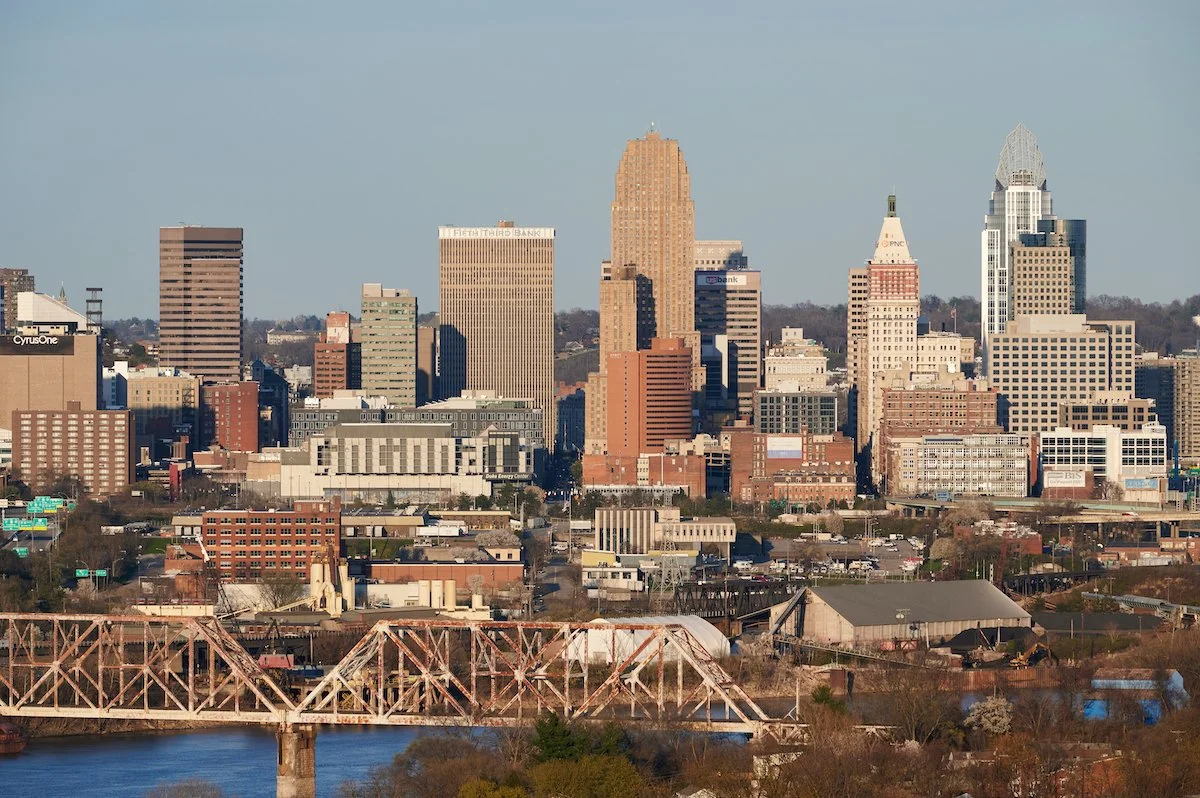
Once upon a time in Cincinnati – Cincy, among friends – a canal ran through the city. The canal itself is long since filled in, its course overlaid by the broad sweep of Central Parkway, but its legacy remains in the name of the neighbourhood to its north, Over-the-Rhine.
From the 1830s, German immigrants began settling in this area (hence, of course, the German river reference), many of them working in the city’s slaughterhouses. In the mid-1800s Cincinnati was the largest pork-packing centre in the United States, earning it the nickname ‘Porkopolis’, but these new settlers also brought their German brewing heritage with them and it is here in Over-the-Rhine that Cincinnati’s fantastically rich beer history begins.
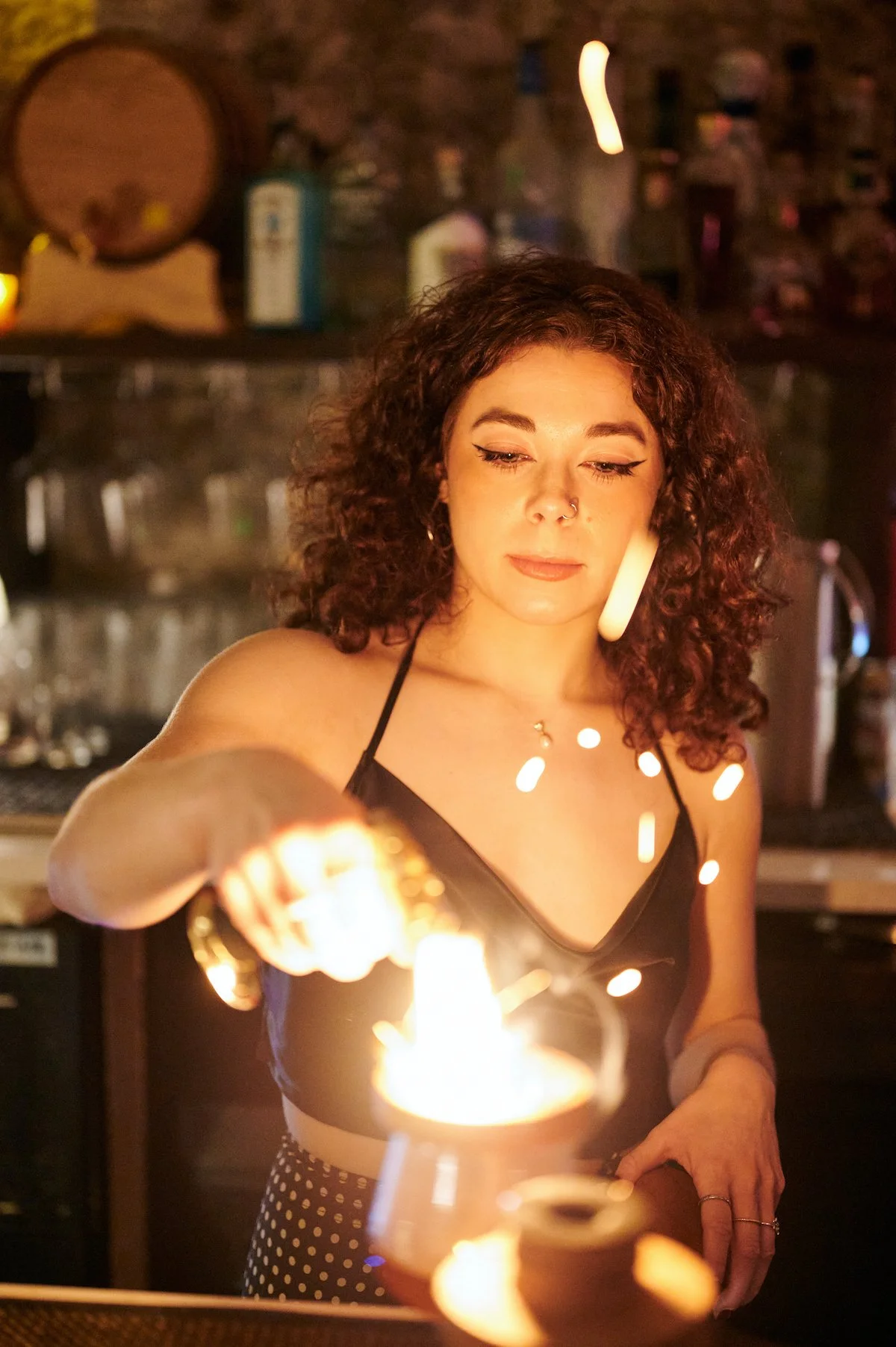
Four storeys underground, beneath the traffic cruising along Vine Street, I’m sitting in the vaulted hall of a former lagering tunnel, sipping an impeccable cocktail below crystal chandeliers. A laid-back jazz three-piece plays at a small stage, a mirror ball sends fragments of light drifting across the brick ceiling, and a blow torch f lares at the bar, sending up renegade sparks as it adds the finishing touches to another smoky alcoholic concoction.
This is Ghost Baby, arguably the coolest of the city’s profusion of über-chic cocktail bars. The tunnel it occupies was one of many built by the city’s multitude of German breweries in the 19th century, to keep lagers cool during fermentation. It’s not actually known how many tunnels there are – the torching of the County Courthouse during riots in the 1880s destroyed most records – but a dozen have been unearthed so far, and more are still being discovered. And yes, since you asked, some say this one’s haunted.
I’d already visited two of the other tunnels below Cincy’s Over-the-Rhine (OTR) with Craig Maness from American Legacy Tours. A narrow staircase led down into a succession of long, vaulted tunnels, once part of the John Kauffman Brewery. The air down here was cool, damp, earthy-smelling. In the spotlit pools of light I could see fixings for the pipes which once pumped iced water down from above, and the ventilation shafts in the wall, which allowed warm air to rise and escape to the streets above. The tunnels were long ago forgotten and filled with rubble, until a chance rediscovery in 2008 led to further exploration – undertaken, in true Cincinnati style, with the sensible combination of a jackhammer, a bunch of good friends and a case of beer.
Christian Moerlein, a Bavarian blacksmith in OTR, having brewed his own beer as a side business, in 1853 opened what was to become the city’s most successful brewery. The Christian Moerlein Brewing Company grew to be the largest brewery in Ohio, the fifth largest in the United States.
‘WITH THE OPENING OF RHINEGEIST, YOU MIGHT SAY OTR – AND CERTAINLY THE STORY OF BEER IN CINCINNATI – WAS TRULY REBORN’
German-style lager had established itself as the beverage of choice in Cincinnati over the preceding decade, and by the 1860s there were 36 breweries in OTR, producing 30 million gallons of beer annually – rising to over 35 million by the 1890s. Much of this was drunk locally – beer consumption in Cincinnati was well over double the national average, and in 1880 there were 113 saloons on Vine Street alone.
Cincy’s seven modest ‘hills’ were also a favourite summer drinking spot – their boozy heights reached in the late 1800s by five funiculars. One provides the setting for the story of the Cincinnati Whale Man.
In the summer of 1877 a certain A.A. Stewart decided to attract visitors to his drinking establishment on Cincy’s Mt Auburn by procuring a live Beluga whale, and installing it in a gigantic salt-water tank on top of the hill. The unfortunate whale was captured in Labrador, transported to Cincy by schooner and train, and seen by thousands – only to die a few days later, largely of starvation. Stewart then had the whale’s body preserved, to attract further visitors – but the process was botched, and within a few days of July sunshine the stench was so unbearable he had to send the carcass to a soap factory. Stewart went on to make his fortune elsewhere, and in 1912 following a holiday in Paris, set sail for New York aboard none other than – the Titanic. Local papers were quick to find the irony, leading with the headline ‘Neptune’s Revenge’.

All this came to an end with Prohibition, which in one swift blow destroyed the city’s beer industry – the breweries closed, supporting businesses collapsed, and thousands found themselves out of work. Cincinnati’s beer barons had long since moved out of OTR, to live in the more affluent hills around the city, and now OTR went into a long, steady decline. By the end of the 20th century it had become the city’s most infamous neighbourhood, a place of poor worker’s housing and high crime.
The renaissance of OTR didn’t come until the early noughties, when a highly efficient system of investment was introduced following the realisation that an important part of the city’s history, along with potential economic and social benefits, was in imminent danger of disappearing. Despite the loss of around half its historic buildings, OTR remains one of the largest and most densely concentrated areas of historic architecture in the US, comparable to Charleston or New Orleans – just much less well known.
It has the greatest concentration of 19th century ‘Italianate’ architecture anywhere in the country, while at its heart Findlay Market is Ohio’s oldest continuously operating public market, central to the neighbourhood’s thriving food scene, including businesses which trace their lineage back to OTR’s early German immigrants. It’s a great – and ongoing – story of urban revival, a neighbourhood now home to scores of new restaurants and bars, with plenty of restored architecture, green parks, great urban art, and its own streetcar.
But it was with the opening of Rhinegeist that you might say OTR – and certainly the story of beer in Cincinnati – was truly reborn. Rhinegeist (‘Rhine ghost’) was one of the first local breweries to open in OTR since its pre-Prohibition heyday. Moving into the old packing hall of the former Christian Moerlein Brewery on Elm Street, it opened in June 2013 – and now produces a whopping 110,000 US barrels a year, distributed across nine states. A plethora of other craft breweries have followed, both in OTR and beyond. Today there are more than 80 breweries in the greater Cincinnati area, and Cincinnati is home to the second biggest Octoberfest in the world after Munich. Beer is very much back in Cincy.
Down below the airy, light-flooded taproom and soaring stainless steel brewhouse at Rhinegeist, Luke Cole sits amid the heavy scent of hops, at a table surrounded by bourbon barrels and huge wooden fermentation vats. Luke was the second brewer brought onboard at Rhinegeist, and works in what he describes as the Barrel World. ‘The barrel world is really two different entities – we have the fresh ageing, bourbon and wine barrels, and then here in the basement, the sours.’ He pauses, strokes his long beard, and asks how I feel about sours – then with a conspiratorial look, suggests we try some of the new batch of Marg Monday. I do not demur. ‘Right on, right on’ he says, looking pleased, before disappearing around the corner and returning with the freshly tapped beer.It’s a 7.4% not-so-sour sour, with refreshing hints of citrus and tequila cunningly mellowed by oak. I’m not usually the biggest fan of sours – but I could have drunk this one all day.
Among Rhinegeist’s many year-round and seasonal brews is Truth – their signature IPA– along with an alarmingly quaffable cider called Zappy.
However, it was the Double Oaked Mastodon, a brooding 14% monster of a Belgian-style dark ale, aged 12 months in bourbon barrels and another six in red wine casks, which really stole the day. Huge, complex and deliciously smooth, it was the first beer I tried in Cincinnati, and it changed my flawed assumptions about American beer forever.
Across the river in Covington, I call in at Braxton, founded by brothers Jake and Evan Rouse – whose journey into beer began when Evan built a brewery in their parents’ garage, aged 16. I ask Jake where he thinks the local brewing industry is heading. ‘The problem now is longevity – for every 10 breweries to open, how many can survive? If there’s no differentiation, there’s no real reason to go to a brewery versus a bar. You have to be different in order to keep growing.’ Cincy’s new breed very sensibly avoid whales, but are no less imaginative in their approach to and reimagining of OTRs classic brewing heritage.
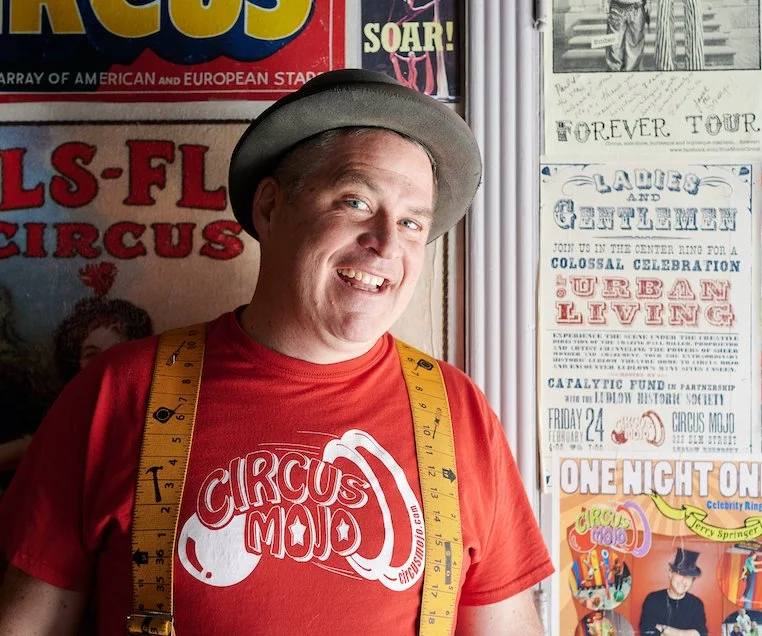
‘You’ll recognise Paul right away’, I was told before I met him. ‘He’s the kind of guy you’d see balancing a chair on his face.’ And sure enough, when I walk through the door of Bircus at the historic Ludlow Theatre in Northern Kentucky, there he is, to the delight of local kids, casually balancing a bar stool on his chin.
Bircus, in case you didn’t pick it up from the name, is the unlikely combination of a brewery and a circus. Paul Miller – known on his business card as Chief Goof Officer – worked as a clown with the legendary Ringling Brothers Circus, before founding the small, independent Circus Mojo, and restoring this former neighbourhood cinema as its home. While trying some of their dozen beers – I took a particular liking to the Japanese rice beer, Akimoto, and their smooth Pie Fighter Pilz – I watch the antics of Circus Mojo, in which Paul’s son and daughter also perform. Originally the brainchild of Ghent-based Circusplaneet, Bircus is a means to ‘eschew government funding in pursuit of circus autonomy’ – while creating some top-notch beers.
Craft breweries – to an infinitely greater extent than behemoth multinationals – tend to be welded closely to their surroundings, and I found community focus a recurring theme in Cincy. Paul runs workshops and summer camps for kids, while at Esoteric, Cincinnati’s only black-owned brewery – under 1% of US breweries are black owned – founder Brian Jackson offered shares locally, making Esoteric community- and employee-owned.
‘ CRAFT BREWERIES - TO AN INFINITELY GREATER EXTENT THAN BEHEMOTH MULTINATIONALS – TEND TO BE WELDED CLOSELY TO THEIR SURROUNDINGS, AND I FOUND COMMUNITY FOCUS A RECURRING THEME IN CINCY’
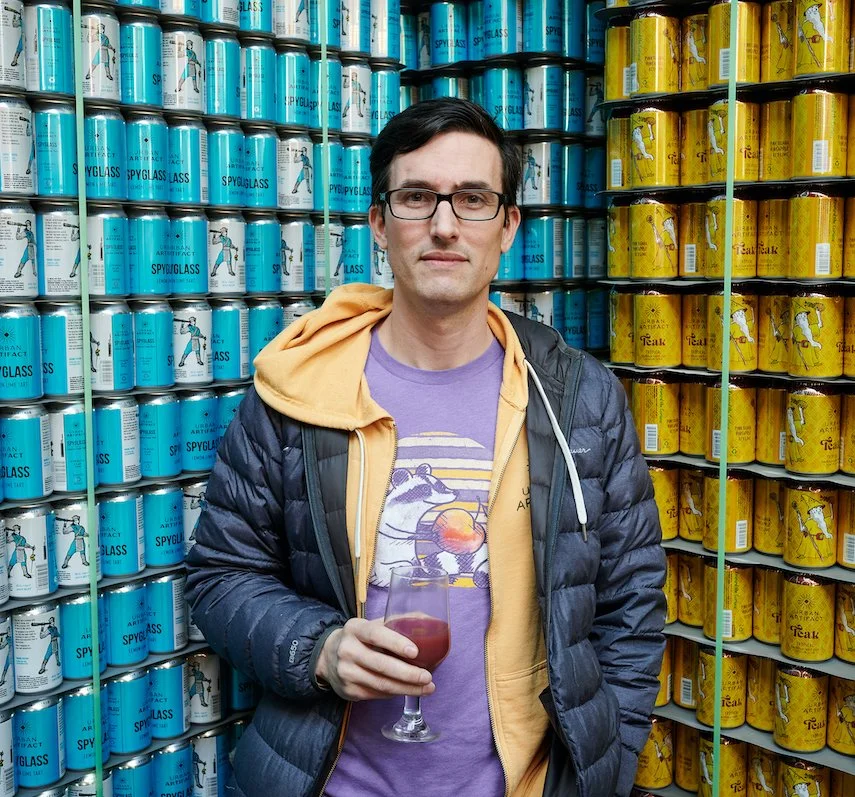
My final stop in Cincy is Urban Artefact – housed in a deconsecrated 1870s church up in Northside, which they call the Fruit Castle. Urban Artifact is the largest dedicated fruit brewery in the world, and since 2015 they’ve brewed their distinctive ‘Fruit Tarts’ (fruit beers) with over 100 different varieties of fruit, from boysenberry to pawpaw.
Inventiveness is off the charts. There’s Pickle, an ale brewed with cucumber and dill; Gadget, made with blackberries, raspberries and a smidgin of vanilla. And then there’s Astronaut Food, which is quite simply, one of the most amazing things I’ve ever tasted. It’s also reckoned to have the most expensive ingredients of any drink anywhere – one batch requires an eye-watering $40,000 worth of freeze-dried strawberries. It carries a whopping 15% punch, but is so perfectly fruit-driven and smooth that you’d never know it (until you’ve had a few and try to stand up, perhaps).
Right from the start, they’ve had a roster of seasonal Goses – German-style sours with a hint of coriander and salt, but given a fruity twist; ‘seasonal fruit, for seasonal beers’ says Scott Hand, one of Urban Artifact’s three co-founders. Their vintage beers were made using wild-caught yeast cultures from the Ohio valley, barrel aged and spontaneously fermented, and named after obscure dinosaurs. ‘Yeah, we’ve experimented with quite a few wild yeasts, captured all over the place’ Scott admits with a laugh, going on to add that the yeast used in all their current catalogue as a pH adjustment, is the one captured closest to home – in the church spire.
Speaking of yeasts. When the 19th century lagering tunnels of the former Linck Brewery were unearthed in 2016, Urban Artifact went down in search of wild yeasts (as you do!) and discovered a live yeast in an old wooden fermentation vat. Saved and nurtured, it now provides the central theme of the annual Missing Linck Festival in June, where a handful of local breweries each offer a beer brewed using this ancient yeast – flamboyantly modern, yet providing a direct link back to OTR’s 19th century brewing heritage.
Huntertones performing Cincy Kid on Audiotree Live recorded on 24 June 2024. This track features on the band’s album Motionation.
This track features on our Volume 7 playlist along with a variety of other tunes that serve as a great companion to this volume of TONIC. Check it out and subscribe to our Spotify channel to enjoy all of our playlists especially curated for our readers.